The Two Parts of Your Brain Fighting Your Next Big Decision
Jul 20, 2026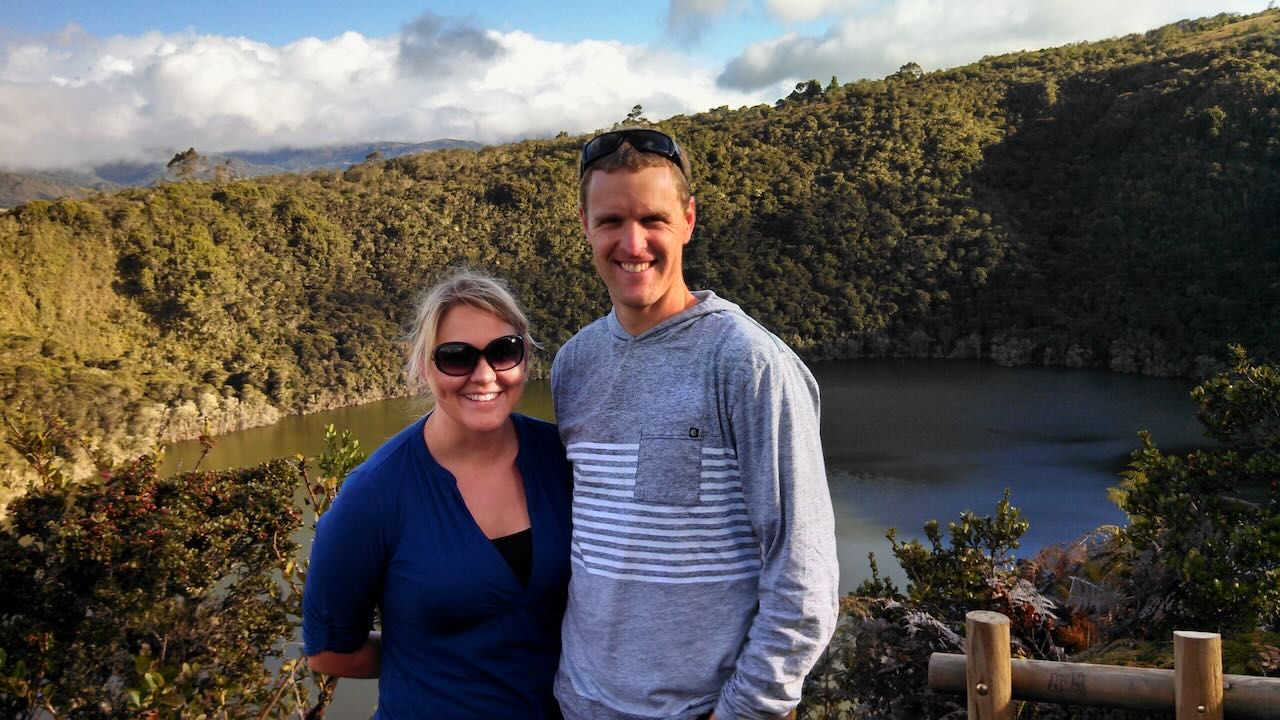
My wife and I almost backed out of moving to Colombia, and looking back on it, that would have been one of the biggest regrets of my life.
In 2014, we had the opportunity to help our company expand internationally, specifically to Colombia, South America. At first, it was easy to get really excited about it. On paper, it made sense. We loved to travel, my wife already spoke Spanish, and the adventure of it was very appealing. We watched Discovery Channel shows about Colombia. We talked to other people who had been there. We ran the numbers, and it just made sense.
But as the time to actually execute the move drew closer, fear started to set in. Were we really going to do this? Were we really going to upset an otherwise comfortable life and make such a bold, risky move? Were we really going to sell most of our possessions and leave behind everything we knew for the unknown?
As those questions swirled around in our heads, it would have been easy to pull the plug on the dream. But I'm so glad we didn't. What we were experiencing, without realizing it at the time, was a war between two parts of the brain.
The amygdala versus the prefrontal cortex
In any big decision in life, there's a war going on inside us between the amygdala, sometimes known as the lizard brain, and the prefrontal cortex (PFC), the part of our brain that controls logical reasoning, planning, and rational thought. The amygdala is usually where fear sits. It's the emotional part of our brain, and it's what we often default to when confronted with risk and uncertainty.
I talk with people all day long about major life decisions, usually involving starting a new business. For many, this means leaving behind what they know: a "safe" job they've been at for years, something they're good at and know well. They're comfortable, but not fulfilled, and yet they want more out of life for themselves and their families. They see the upside potential of what business ownership could be. They connect with a dream.
And yet, starting a new venture like investing in a business involves risk. There's the unknown. There's the financial investment. There's the thought of leaving the comfortable for the uncomfortable, even if the upside potential is enormous.
Much like my experience as I got closer and closer to actually pulling the trigger and moving my family to Colombia, there comes a point for every would-be entrepreneur where fear sets in as they get closer to actually making the move to start a new business. It's in that moment that the amygdala takes over. The childlike lizard brain tries to draw them back to perceived safety and security. And while from a genetic coding standpoint that makes some sense, the risk of being controlled by our emotions is that we may just miss out on the greater good, a future that is beyond anything we could achieve if we remained where we are right now.
"But what if you don't fail?"
Early in my entrepreneurial journey, I had a new business idea I was excited about. I was talking with a mentor, and he asked me a question that forever changed the way I filter major life decisions. The new venture involved some risk — certainly financial risk, and potentially pride and ego risk as well, and I was wrestling with all of that. (I was very much in my amygdala at that point.) I asked my mentor, "What if I fail?"
Here's how he responded, and it's the question I'd ask you as well:
"But what if you don't?"
That is a profound question. It's easy, when we're being controlled by our amygdala, to focus on the risk, the negatives, the potential for failure. But I firmly believe we get what we focus on, and worrying about whether or not you're going to fail keeps the focus on failure. My mentor reframed the question for me. What if I succeed? What if I don't fail? What if everything I was excited about in the new venture plays out at least as good as I envisioned, maybe even better? What if I succeed beyond my wildest hopes and expectations?
When he asked me that, everything shifted.
Asking the question itself is powerful, but it's also important to put some action behind it. Specifically, it's important to take time to actually write out best-case and worst-case scenarios. This forces us to move from our amygdala into our prefrontal cortex. Humans are, at the end of the day, rational creatures. We have the ability to think, plan, and strategize, and part of how we ensure our amygdala doesn't derail our hopes and dreams is to give some power back to our PFC.
Alex Hormozi, a business expert I've learned a lot from over the years, has shared a similar story about leaving his high-paying Wall Street consulting job to start his first business. Like all of us, he was scared. But he ran the numbers on the actual worst-case scenario and realized it wasn't nearly as bad as his fear had made it out to be. He'd lose an investment he could recover from, and he'd walk away with hard-won lessons and a heck of a story. Once the "fear monster" his amygdala had built up turned out to be far smaller than he'd imagined, he made the leap. The rest, as they say, is history.
If you're at the point of making a major decision, including potentially investing some of your hard-earned savings into a new business venture, I'd encourage you to shift into your PFC and conduct that same exercise. When you perform a true best-case / worst-case analysis, you'll likely discover that the worst case (however you define "failure") isn't nearly as bad as fear has led you to believe.
Keep your eye on the prize
The other thing I've found is that the clearer we become about the ideal future we want for ourselves, the easier it becomes to take the actions that will move us toward that envisioned future. Ultimately, it comes down to this: if you continue doing exactly what you're doing today, how likely is it that you'll have your dream life five years from now?
When I was working in the corporate world shortly after college, that was a very sobering and scary thought. Talk about fear. That future was what I feared most, because as I looked around at the people I was working with and the life I'd likely have five years down the road if nothing changed, it didn't line up with what I ultimately wanted. I wanted a future with more freedom over my time and income, and the ability to make an impact on the world around me. My ideal future certainly didn't involve grinding away in an office setting 60 hours a week. So yes, there was fear of leaving a secure job behind and striking out as an entrepreneur. But where the status quo was leading me scared me even more.
Now, there are very real action steps required to cross the bridge from where you are now in your corporate scenario to actually getting a new business to the point of profitability and creating the lifestyle you ultimately envision for you and your family. This is where the PFC comes in. There are answers to those questions. There are strategies for growing a business. If you go the franchise route, one of the benefits is that you're handed a playbook that removes a lot of the guesswork.
The point is, spend some time in your PFC, planning, validating, and creating pro formas to ensure you're making the best possible decision about which business to invest in. But even when you do all of that, there will likely come a point where fear creeps back in, your amygdala takes over, and you start to get cold feet. (Cold feet is essentially your amygdala trying to suck you back to a place of perceived safety.) When that starts to happen, reconnect with your "why" and your vision of the life you ultimately want for you and your family.
What if you fail?
No, what if you succeed and accomplish everything you know is possible!
But to get there, you'll likely need to leave behind the old and put on the new. If you're wrestling with a decision like this right now, I'd love to hear about it. Reach out and let's talk it through.
Ready to explore your next steps on the path to franchise ownership?
Let us help you cut through the noise and simplify an otherwise complex process so that you can focus on what's most important in your life. Get all of your questions answered, risk-free. Click below to schedule a no-obligation intro call. We're looking forward to connecting with you soon!